15+ years building products at the intersection of knowledge, trust, and technology.
The thread connecting twenty years of work is not a technology or an industry — it is a question: how do people find what they need to know, and what gets in the way? From peer review to predictive analytics to location-based discovery, every project has been an attempt to close that gap. The tools change. The problem doesn't.
Active Projects
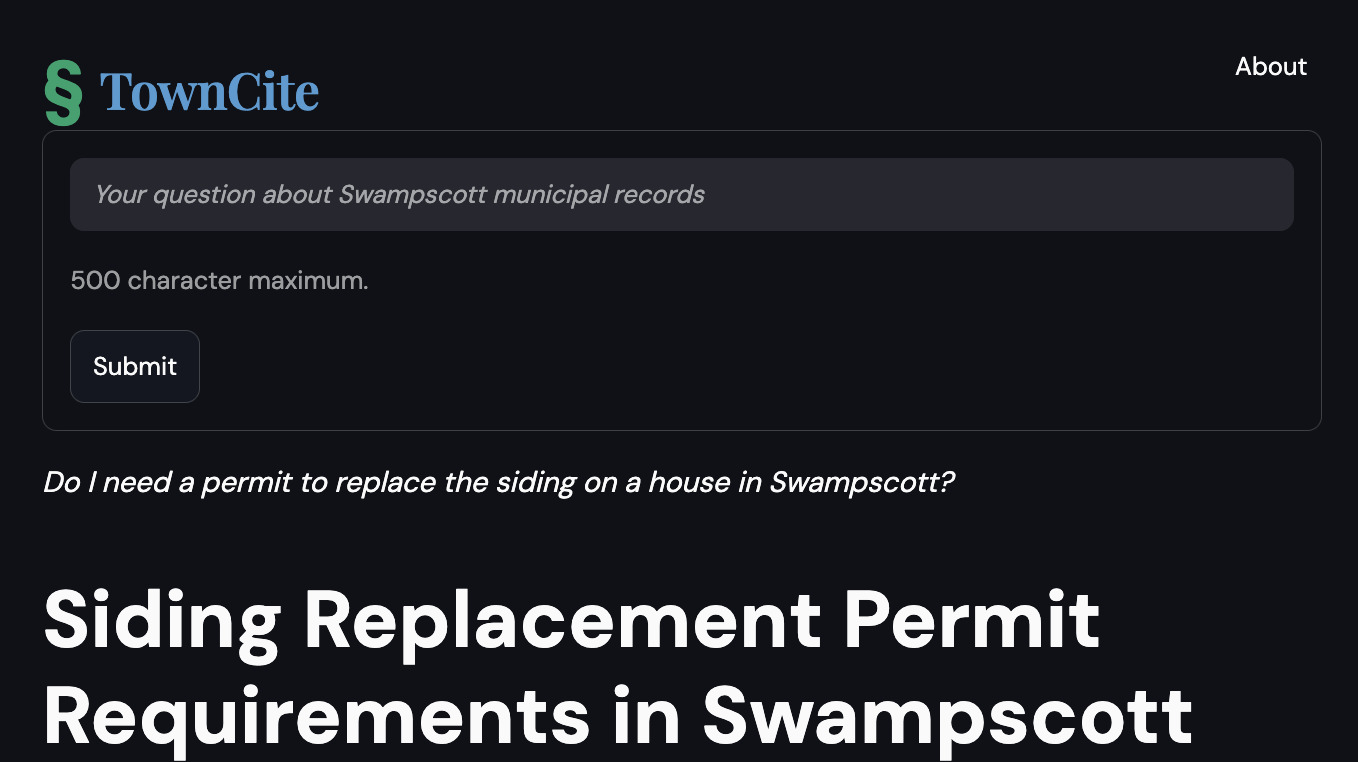
TownCite is an AI research assistant for municipal records. It gives real estate professionals, attorneys, developers, and contractors instant, cited answers to questions they currently get by calling Town Hall, filing public records requests, or showing up in person. The first instance covers Swampscott, MA — every ZBA decision, planning board minute, conservation commission filing, zoning bylaw, and deed transaction since 2015, ingested into a retrieval-augmented generation pipeline and queryable in plain English. Essex County expansion is next.
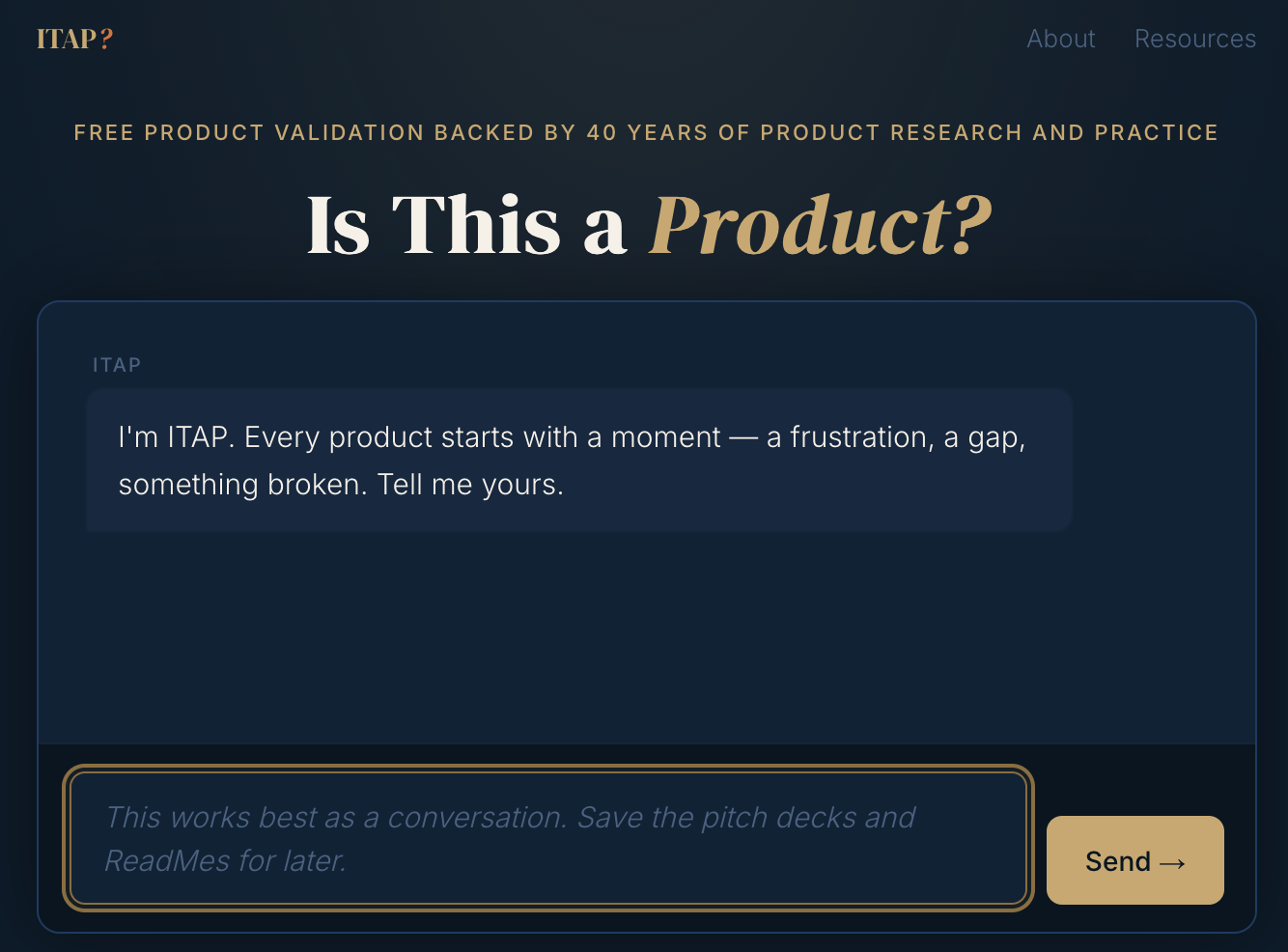
A free conversational diagnostic that runs a product idea through six evidence-based layers — problem legitimacy, customer specificity, willingness to pay, artifact analysis, market signal, and verdict — then returns a gap scorecard grounded in published research from Levitt, Blank, Fitzpatrick, Cagan, and others. No accounts, no email capture, no opinions: every finding is traceable to a source.
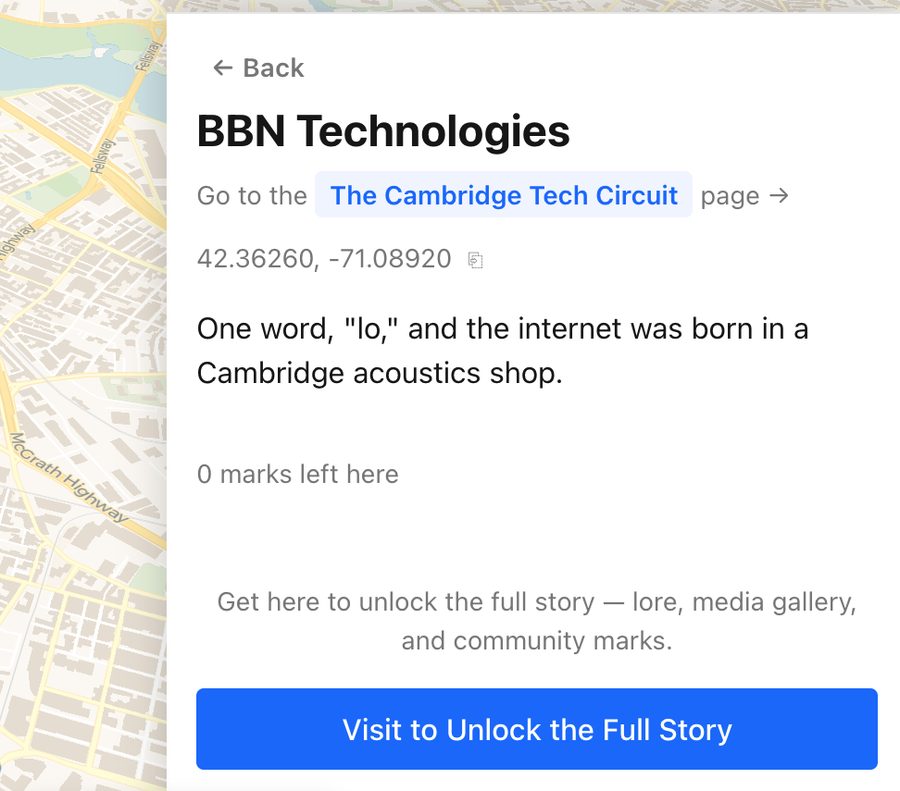
Community exploration platform for obsessives — people who care too much about the right things and want to find their people in the real world. Pinned locations unlock full lore and community marks only when you physically show up. Built on Node.js, PostgreSQL + PostGIS, MapLibre, and Cloudflare.

Single-elimination bracket tracker for the 2026 NCAA Men's Lacrosse tournament. 16 teams, 15 picks, one champion. Deployed as a static site — zero backend, zero dependencies, zero budget.
Refreshed each year during NCAA Lacrosse championship season (2 weeks). Off-season between refreshes.
Melee is a social prediction platform for private friend groups — pick brackets, award-show ballots, or any structured event, then watch picks, trash talk, and the leaderboard update in real time. It wasn't designed, it was discovered: a one-off NCAA lacrosse bracket app revealed that the social layer — pick visibility, chatter, leaderboard transparency — drives more engagement than the event itself. AI-assisted event creation now lets a host scaffold any competition from a plain-English description in minutes.